


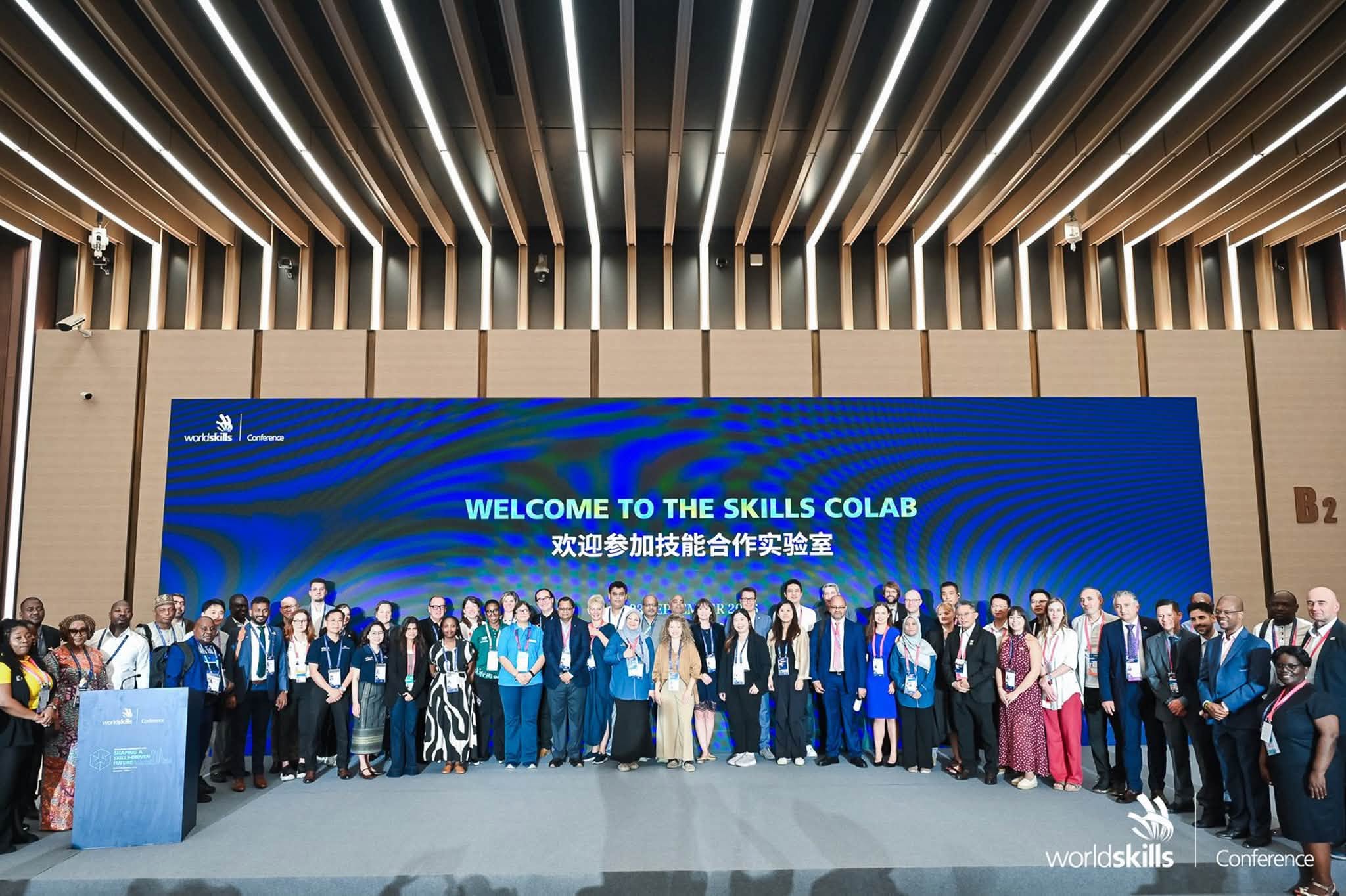
VTESS showcases Lao-Swiss employment coaching model at WorldSkills Shanghai, with 80% of surveyed graduates employed and women making up two-thirds of programme graduates
VIENTIANE, Lao PDR, 28 September 2026 — A vocational training model helping vulnerable young people in Laos move into employment, entrepreneurship and higher incomes has gained international attention after being presented at the WorldSkills Conference in Shanghai, China, from 23–25 September 2026.
The Vocational Training and Employment Support Services (VTESS) project shared its Lao-localised vocational coaching approach at Skills CoLab, a practitioner exchange platform of the WorldSkills Conference, highlighting how international expertise can be adapted to local realities to create lasting employment opportunities.
The results are significant. According to the project’s 5th Tracer Study in 2025, around 80% of 307 Employment Support Services graduates surveyed were employed. Among 187 graduates with comparable baseline and current financial information, average monthly earnings increased by more than 160%.
For many participants, the programme represented their first meaningful opportunity to earn a stable income.
“Investment in skills should be measured not by how many people are trained, but by the futures it creates. Young people once on the margins are now workers, entrepreneurs and employers,” said **Jean-Gabriel Duss, Regional Director, SDC Mekong Region**.
He said the Lao-Swiss partnership showcased in Shanghai demonstrates a coaching approach that develops “the most important skill of all: the ability to learn, act and drive one’s own change.”

From training to employment and entrepreneurship
Funded by the Swiss Agency for Development and Cooperation (SDC), VTESS is implemented by a consortium of Swisscontact and the Lucerne University of Applied Sciences and Arts (HSLU) in partnership with the Department of Technical and Vocational Education and Training under the Ministry of Education and Sports.
The programme targets young people aged 15–35, particularly early school leavers and young people living in income poverty, across Oudomxay, Xayaboury, Xiengkhuang, Khammuane, Salavan and Vientiane Capital.
At the centre of the programme is the Coaching Cycle for Employment and Entrepreneurship (C4EE).
Adapted from European and international models by HSLU experts together with Lao partners, the methodology has been transformed into a streamlined nine-month Lao-language programme combining practical vocational skills, soft skills, employment coaching, job placement support, entrepreneurship training and seed grants for promising businesses.
Rather than focusing only on technical training, the model supports young people through the transition from learning to earning.

A beauty salon that transformed a family’s income
For Ms. Vadsana Inthavongsa, participation in the programme changed the direction of her life.
Before joining the coaching cycle, she worked as an assistant in her cousin’s beauty salon but earned too little to adequately support her family.
After completing the programme and receiving seed funding, she opened her own beauty salon in March 2025.
> “Graduating from the coaching cycle and receiving the project’s seed money completely transformed my life,” she said. “Today, I am proud to run my own small salon and earn around **18 million LAK a month**, which has greatly improved our living conditions and allowed me to provide a stable future for my family.”
Another graduate, Mr. Somphone Meunpanya, previously depended largely on daily wage labour.
After completing Batch 3 of the coaching cycle, he opened his own barber shop.
“Opening my own barber shop completely changed that,” he said. “Today, I am proud to earn around **5 million LAK a month**, which has given me financial independence and a stable future.”
Their experiences reflect a broader shift identified by the tracer study.
Of the 246 employed graduates among the 307 surveyed, 98 were working for employers, 139 were self-employed and nine were earning income through family businesses.

Women at the centre of the programme
Women have been among the strongest beneficiaries of the VTESS approach.
Across the first four C4EE batches, women accounted for 962 of 1,461 Employment Support Services graduates, or 66%.
Women also represented around 80% of those completing Basic Entrepreneurship Training, with 535 female trainees, and 80% of Seed Money recipients, with 323 women receiving support to establish or expand small businesses.
The fifth batch is currently underway, supporting another 632 participants, of whom 377, or about 60%, are female.
The figures demonstrate how skills development and entrepreneurship support can provide pathways towards greater economic independence, particularly for young women who may otherwise have limited access to formal employment.
Laos model presented internationally
VTESS’s participation in WorldSkills Shanghai also highlights efforts to build local capacity rather than rely permanently on international expertise.
Through the project, training capabilities developed with HSLU have been transferred to Lao trainers and provincial coordinators, creating a locally managed model that can continue supporting young people and potentially be expanded to other areas.
The Lao government sees potential for the approach to contribute to the country’s wider vocational education system.
Mr. Tingkham Soulintha, Deputy Director General of the Department of Technical and Vocational Education and Training, Ministry of Education and Sports, said the results show the value of combining international innovation with Lao realities.
“VTESS has proven that combining international innovation with local realities generates real economic self-reliance for our young people, particularly women,” he said.
He added that the Ministry strongly supports expanding the model nationwide and emphasised that the project is aligned with the five-year Strategic Plan for Technical and Vocational Education and Training Development as well as the priorities of the Ministry of Education and Sports.

Building skills that lead to income
The experience of VTESS suggests that vocational education can have greater impact when technical training is combined with coaching, entrepreneurship, employment services and continued support as young people enter the labour market.
Its presentation at WorldSkills Shanghai gives Laos an opportunity to share that experience internationally while learning from skills-development practitioners from around the world.
For young graduates such as Vadsana and Somphone, however, the impact can be measured much closer to home: a business of their own, a reliable monthly income and greater confidence about the future.
About VTESS
The Vocational Training and Employment Support Services (VTESS) project is funded by the Swiss Agency for Development and Cooperation (SDC) and implemented by a consortium of Swisscontact and the Lucerne University of Applied Sciences and Arts (HSLU) in partnership with the Department of Technical and Vocational Education and Training under the Ministry of Education and Sports of Lao PDR.
The project supports young people aged 15–35 in Oudomxay, Xayaboury, Xiengkhuang, Khammuane, Salavan and Vientiane Capital.
About Swisscontact
Swisscontact is an independent foundation for international development cooperation established in 1959. It promotes skills development, entrepreneurship and sustainable economic growth and is active in more than 130 projects across nearly 40 countries.
About Swiss Cooperation in Lao PDR
The Swiss Agency for Development and Cooperation (SDC) implements Switzerland’s international cooperation activities, including programmes aimed at reducing poverty, strengthening economic opportunities and supporting sustainable development.


