


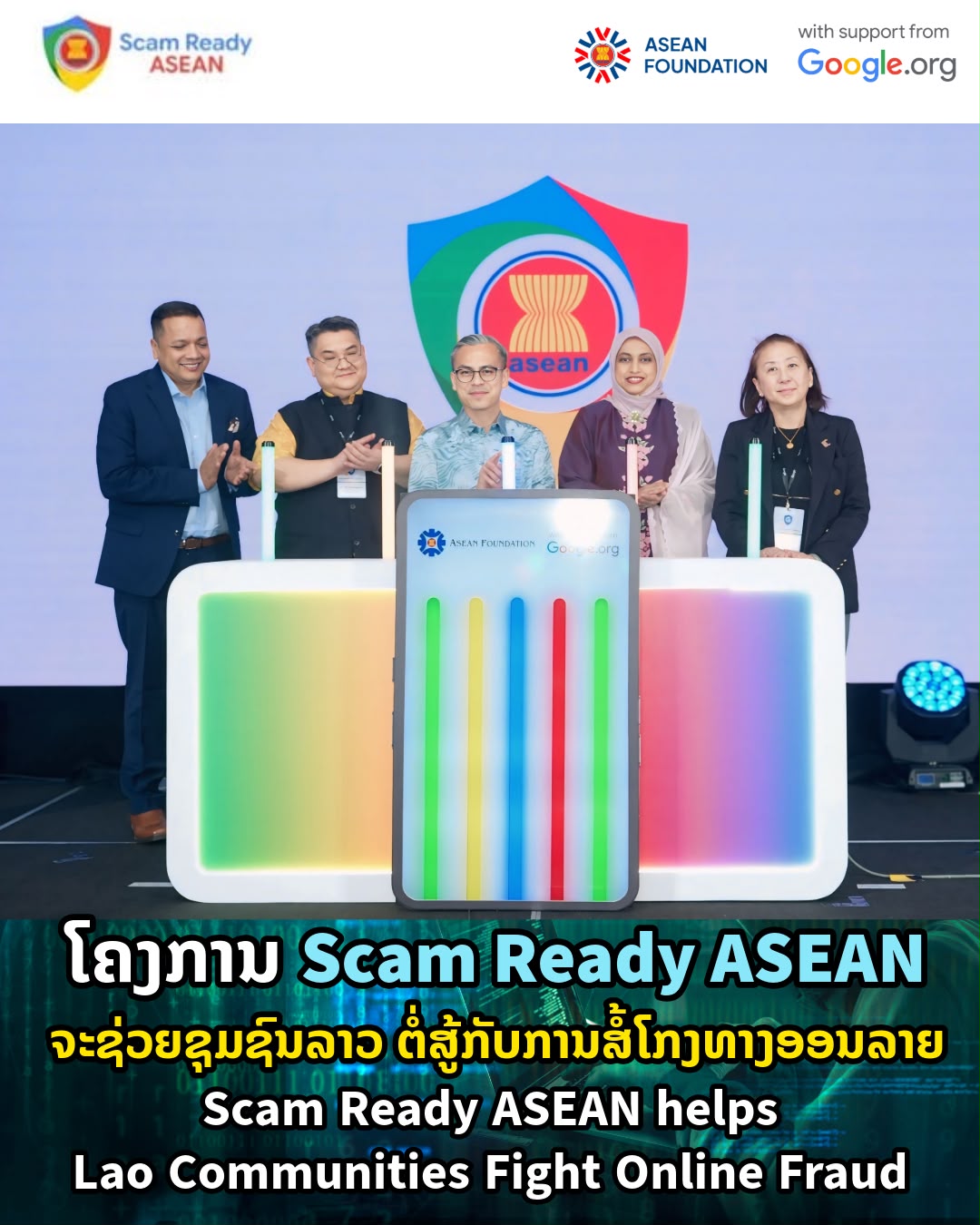
VIENTIANE — Online scams are becoming more sophisticated across Southeast Asia, targeting people through phone calls, social media, fake job offers, online shopping, banking messages and impersonation. In response, Scam Ready ASEAN has been launched to strengthen public awareness and help communities recognise, prevent and respond to online fraud.
The regional initiative is led by the ASEAN Foundation with support from Google.org, which has committed US$5 million to the programme. Scam Ready ASEAN aims to reach three million people across ASEAN, including young people, educators, parents, caregivers and older persons. The programme also plans to prepare 2,000 Master Trainers, who will help provide deeper scam-prevention and digital-resilience training to more than 550,000 learners across the region.
In Laos, Lao Youth Radio will serve as local implementing partners and will work closely with relevant ministries, educational institutions, youth networks and other stakeholders to adapt the initiative to the Lao context.
The programme comes at a time when more Lao people are using smartphones, social media, online banking and digital payment services in their daily lives. While digital technology brings many opportunities, it also creates new risks.
Scammers may pretend to be bank officers, government officials, police, company representatives, recruiters, online sellers or even friends and relatives. Their messages often create fear, urgency or excitement in order to pressure victims into transferring money, clicking suspicious links or sharing personal information.
Artificial intelligence can also make scams more convincing by helping criminals create realistic messages, images and voices.
According to the ASEAN Foundation, Southeast Asia suffered financial losses of up to US$23.6 billion from online scams and fraud in 2024. The Foundation describes online scams as a growing regional challenge requiring coordinated action among governments, communities, technology companies and civil society.
One important feature of Scam Ready ASEAN is “Be Scam Ready,” an interactive scenario-based learning game. Participants experience simulated scam situations and practise deciding what to do before they encounter similar risks in real life.
For Lao communities, the initiative will focus not only on awareness but also on practical habits that people can use every day.
Before transferring money, verify who is asking.
Before clicking a link, check where it came from.
Before sharing passwords, banking information or verification codes, stop and think.
If a message creates unusual pressure or demands immediate action, people should independently contact the organisation or person involved through an official channel.
Scam prevention can also become a shared community responsibility. A student who understands online scams can help parents recognise suspicious messages. Teachers can help students identify fake job advertisements. Young people can warn friends about fraudulent investment offers, while family members can help older relatives verify suspicious phone calls.
Through Scam Ready ASEAN, Lao Youth Radio aim to help bring these practical digital-safety skills to communities across Laos in cooperation with national partners.
As digital technology becomes increasingly important in education, business, communication and financial services, public awareness must grow at the same pace.
The message is simple: stop, think and check before you click, share information or transfer money. Be alert. Be informed. Be Scam Ready.
