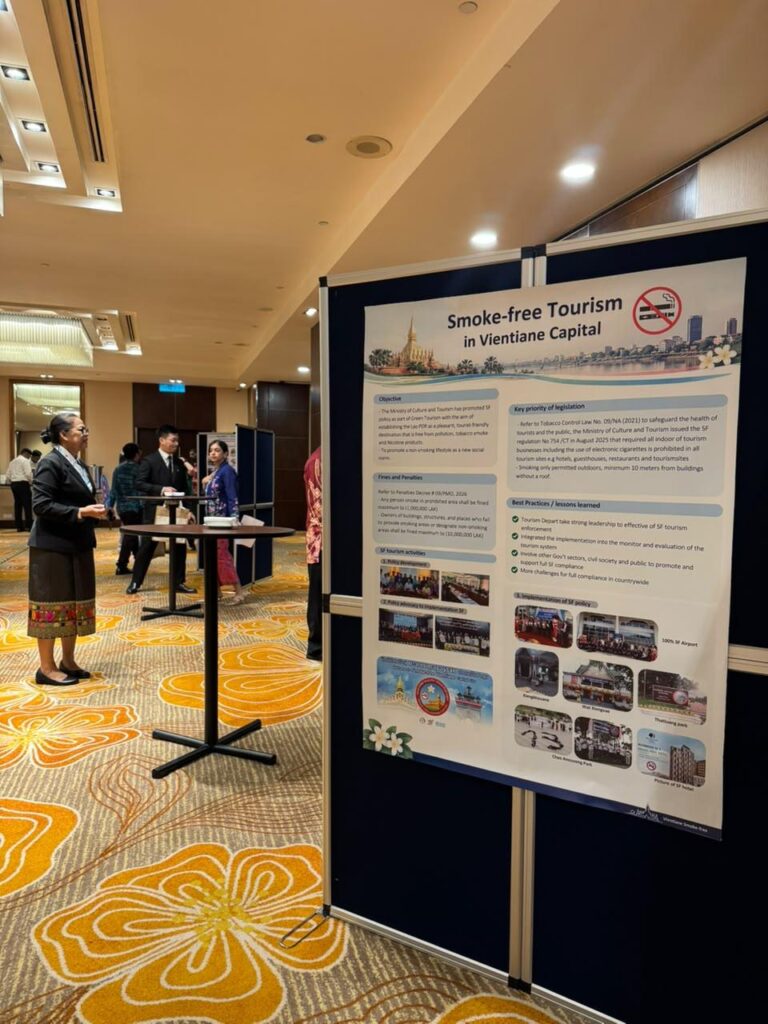


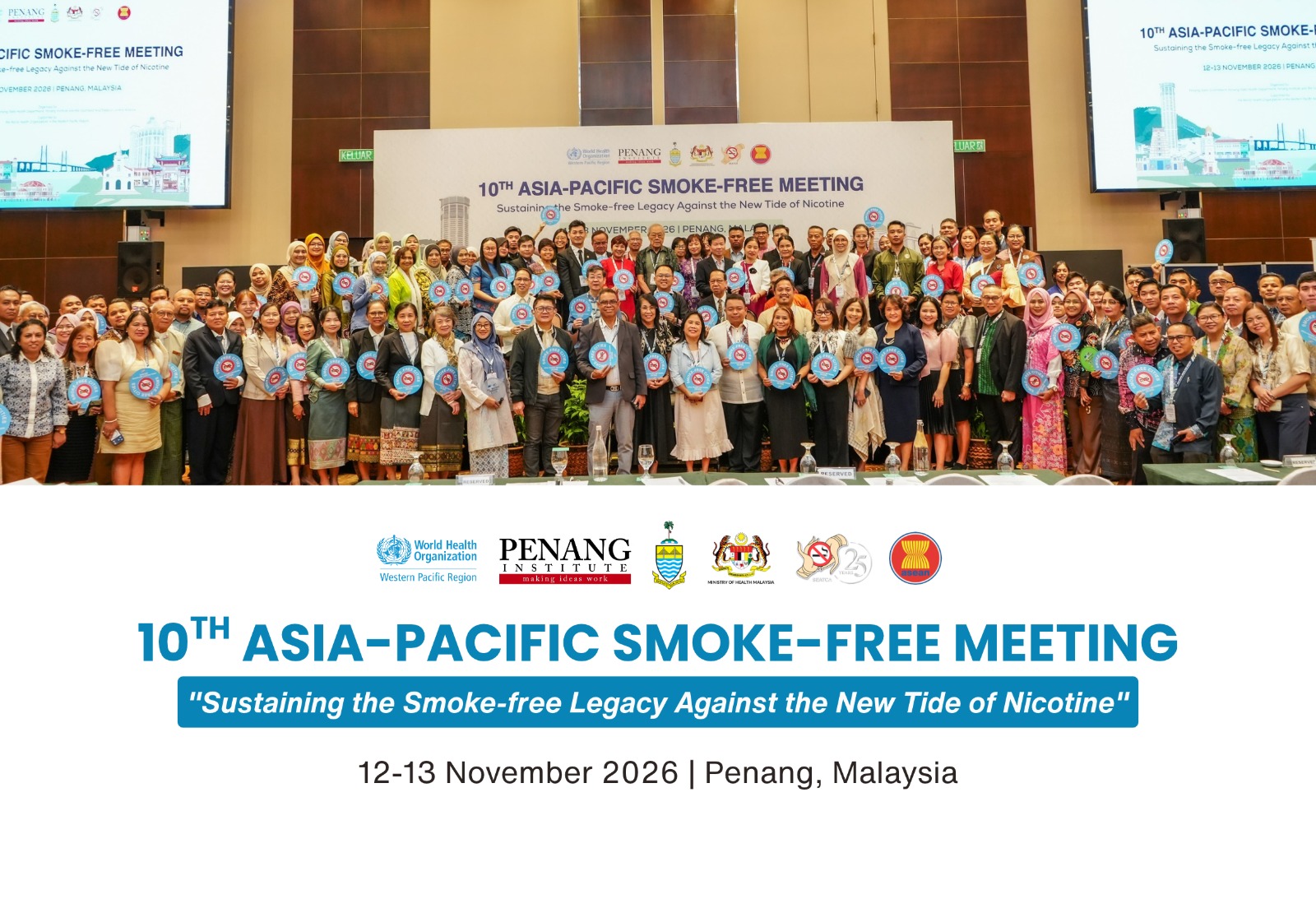
12 November 2026, PENANG, MALAYSIA – More than 180 government officials, civil society groups, and public health champions from 13 Asia-Pacific countries gathered in Penang, Malaysia, for the 10th Asia-Pacific Smoke-Free Meeting. The summit is focused on protecting hard-won gains in tobacco control, particularly policies safeguarding smoke-free spaces, amid the tobacco industry’s aggressive promotion of harmful e-cigarettes/vapes and heated tobacco products as supposedly “reduced-risk” or “smoke-free” alternatives.
With the theme “Sustaining the Smoke-free Legacy Against the New Tide of Nicotine,” the 2-day meeting is organized by the Penang State Government, Penang State Health Department, Penang Institute, Southeast Asia Tobacco Control Alliance (SEATCA), and the World Health Organization in the Western Pacific Region (WHO WPRO).

The meeting includes a study tour of George Town, Penang, which was recently recognized as a Silver awardee in the 2nd ASEAN Smoke-free Awards (ASA). The tour showcases the city’s best practices in protecting both tourists and residents through enforcement of its smoke-free policies.
“We are grateful to share Penang’s best practices with our fellow smoke-free champions in the Asia-Pacific region. Penang has always strived to build its reputation on clean air and safe public spaces. We will continue working together across the region to ensure that the next generation inherits environments genuinely free from all forms of tobacco and nicotine addiction,” declared YB Daniel Gooi Zi Sen, Penang State Executive Councillor for Youth, Sports and Health. “In Malaysia and across the Asia-Pacific region, our highest priority as leaders is the health and well-being of our citizens, particularly our youth. We will not allow the tobacco industry to undermine our public health achievements or manipulate our young people with false narratives.”

The delegates reaffirmed that authentic smoke-free policies mean 100% clean and healthy air, free from toxic emissions and nicotine addiction, rather than substituting one harmful product for another.
Governments and health advocates are collaboratively achieving 100% smoke-free spaces that protect communities against the harms of secondhand smoke, whether from cigarettes or electronic smoking devices. This also denormalizes smoking and vaping, particularly among children and youth exposed to these harmful behaviours in parks, shopping centers, and around schools,” explained Dr. Ulysses Dorotheo, Executive Director of SEATCA. “Together with over 180 smoke-free champions at this meeting, we reject the tobacco industry’s attempts to hijack the term ‘smoke-free’ to promote newer nicotine products that poison the air we breathe.”

“WHO stands with countries and public health partners across the Asia-Pacific region in protecting people from the harms of tobacco and nicotine products,” said Xi Yin, Coordinator, Health Promotion and Policy Unit under the Division for Health Promotion, Disease Prevention and Control at the WHO Regional Office for the Western Pacific. “The term ‘smoke-free’ should continue to reflect the objective of protecting people from exposure to tobacco smoke and other harmful emissions in public spaces.”

The meeting highlights commitments from government and civil society representatives to strengthen regional collaboration, protect the public health gains achieved by the smoke-free movement, and continue expanding protection of public spaces against all forms of smoking and vaping.